

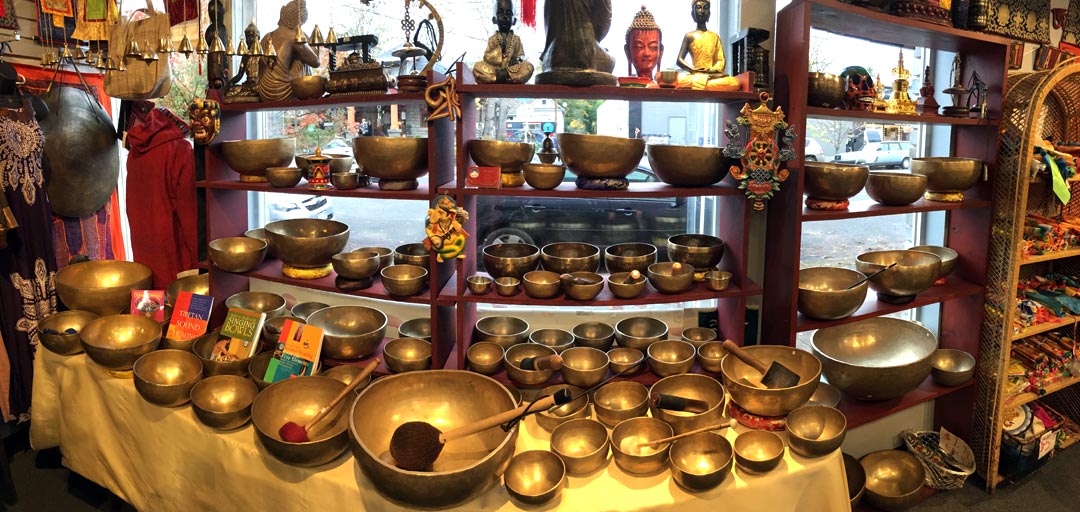
We also specialize in handmade and hand carved Tibet Singing Bowls. We have close to 1000 bowls of every size and tone. Tibet Spirit is famous for Tibetan Singing Bowls. We have many professional customers who are Message Therapists, Meditation experts and Doctors. When people want the finest and best Tibetan Singing Bowls they come to our store. If you do not see what you want online just email us and we're sure to have something to perfectly fit your needs.
Singing bowls (also known as Himalayan bowls, rin gongs, medicine bowls,Tibetan bowls or Suzu Gongs in Japan) are a type of bell, specifically classified as a standing bell. The sides and rim of singing bowls vibrate to produce sound.
Singing bowls were traditionally used throughout Asia as part of Bönand Tantric Buddhist sadhana. Today they are employed worldwide both within and without these spiritual traditions, for meditation, trance-induction, relaxation, healthcare, personal well-being and religious practice.
Singing bowls were historically made in Tibet, Nepal, India, Bhutan, China, Japan and Korea. The best known type are from the Himalayan region and are often termed Tibetan singing bowls. Tibetan Singing Bowls are also prized as musical instruments by many.
Traditionally, antique singing bowls were made of five metals (Panchaloha in Sanskrit) a bronze alloy of copper, tin, zinc and iron and other metals. Antiques often include silver, gold, nickel and the most prized "sky-iron" (Wylie: thog chags) from meteorites and tektites (as did the Phurba, an accompanying tool). Enjoy all of our Dharma products.